Construction projects rely greatly on the movement of structural components, machinery, and heavy materials from one stage of the build to another.
Steel beams, concrete sections, and mechanical equipment must often be positioned or repositioned as work progresses. These activities rarely occur in fully controlled environments. Unfinished terrain, temporary structures, and operating equipment can introduce additional hazards around work zones.
In this blog, we explain how hydraulic winches contribute to construction safety and discuss some engineering features that aid all-around protection.
A Broad View on Construction Sectors and Safety Risks
Heavy load handling is a routine part of many construction sectors. For example:
- Bridge and highway construction projects frequently require moving large structural components into position.
- Structural steel installation involves lifting and aligning beams that may weigh several tons.
- Energy and utility projects depend on the precise placement of equipment during infrastructure installation.
Operations like these introduce safety risks. For instance, loads may shift during repositioning. Uneven terrain can make movement unpredictable. Limited working space often places crews close to heavy equipment. Equipment movement near workers also increases the chance of accidental contact.
Additionally, published data illustrate construction safety challenges. A recent study by Canada Safety Training Centre revealed that the construction industry consistently records thousands of lost-time workplace injuries each year. Leading causes include material handling incidents and equipment-related accidents.
4 Ways Hydraulic Winch Equipment Reduces Safety Risks
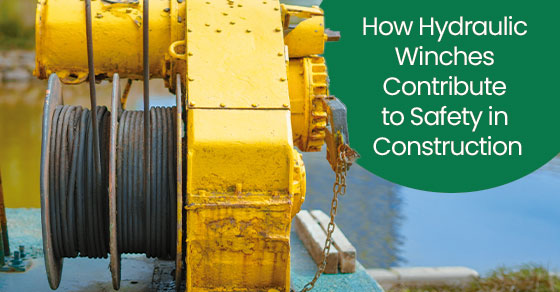
Hydraulic winch equipment supports safer construction operations by helping crews manage heavy loads with greater control and predictability. Their ability to deliver a steady pulling force plays an important role in decreasing several common job site hazards.
1. Reduced risk of load shift
Heavy materials can become unstable if the pulling tension changes suddenly. Uneven tension may cause a load to twist or slide out of position. Hydraulic winch equipment maintains steady tension, which helps keep loads balanced while they move.
For example, during structural steel installation, beams must remain aligned as they are repositioned. Consistent tension prevents the beam from swinging or shifting unexpectedly.
2. Safer equipment positioning
Most construction sites require the accurate positioning of large equipment. Hydraulic winches allow operators to make small adjustments while guiding heavy machinery or structural components into place.
Let’s say a construction project entails installing large concrete forms or positioning mechanical equipment on a foundation. The ability that winches have to control movement carefully prevents accidental contact with nearby structures or tools.
3. Less worker exposure near loads
Manual adjustments around moving loads can increase the risk of injury. Winch equipment allows operators to control movement from a safer distance. Workers can monitor positioning without standing directly beside heavy materials.
For instance, when pulling pipes or cable reels across a job site, operators can guide the movement from the equipment controls. The ground crews can also supervise from safer positions.
4. Reliable performance under heavy loads
Among the safety solutions winches provide is consistent performance under heavy loads. Whether projects entail pulling loads across uneven terrain, gravel surfaces, or partially completed structures, hydraulic systems maintain reliable power even when resistance increases.
In essence, winch equipment is the go-to system for controlled load movement and the reduction of sudden motion. These perks make them part of practical safety solutions that projects should integrate when handling heavy materials.
Some Engineering Features That Further Support Construction Safety
There are some great engineering features built into hydraulic winches that support construction safety.
- Hydraulic counterbalance valve: This mechanism regulates hydraulic pressure within the system. The control of the flow of hydraulic fluid enables the valve to prevent free-fall or uncontrolled descent when a load is being moved or lowered.
- Controlled drum rotation: Unlike the counterbalance valve, the drum rotation engineering feature enables operators to manage tension more precisely. This prevents abrupt movement that could destabilize materials or equipment. In addition, integrated braking mechanisms provide further control when loads must be held in place during positioning.
Structural reinforcement within the winch assembly contributes to durability under heavy loads. Components are designed to handle major mechanical stress without compromising performance. The design elements also work together to create dependable safety solutions for demanding construction environments.
Beyond Load Control: What Construction Project Leaders Should Know
It is common to see construction project leaders focus on moving capacity, equipment size, and deadlines. Less attention is given to how load-handling equipment affects crew coordination during heavy material movement.
Yet, the predictability of load movement can influence how safely teams work together on active sites.
Handling heavy materials usually includes multiple workers. A winch operator controls the pull while a signaler directs movement, and ground crews guide the load into place. Each person depends on a stable equipment response. Sudden tension changes or unpredictable movement can force workers to step closer to the load to correct alignment, thus exposing them to the hazard automatically.
Hydraulic systems improve coordination between workers. Crews can easily guide beams, equipment, or structural components into position more safely.
Our Hydraulic Winch Systems Are Built for Demanding Projects
Hydraulic Winch Co. is a reliable manufacturer of sturdy winch systems for construction projects. Our lineup includes:
- Offshore hydraulic winches.
- Marine winches.
- Marine anchor winch systems.
- Heavy-duty hydraulic winches designed for demanding applications.
Our expert engineers also produce hydraulic capstan winches, bayonet winches, hydraulic power packs, and manhole kits. Rope options are also available to support a range of operational requirements.
Construction safety remains a top priority. Every piece of equipment, including offshore winches, undergoes rigorous load testing to verify performance and durability. There is also close collaboration with clients to configure hydraulic drum winches and hydraulic pulling winches suited to specific project requirements.
In addition, we provide technical documentation, training materials, remote assistance, and spare parts. Together, they aid reliable operation across marine operations, railroad construction, fibre and cable pulling, and heavy transport.
Talk to us today at 888-413-6459 or reach out online to discuss the right industrial winch solution for your construction project.